VAR Decision Trends in Domestic Cup Knockout Stages: A Data Overview
Written by Xander Becker · Jun 14, 2026
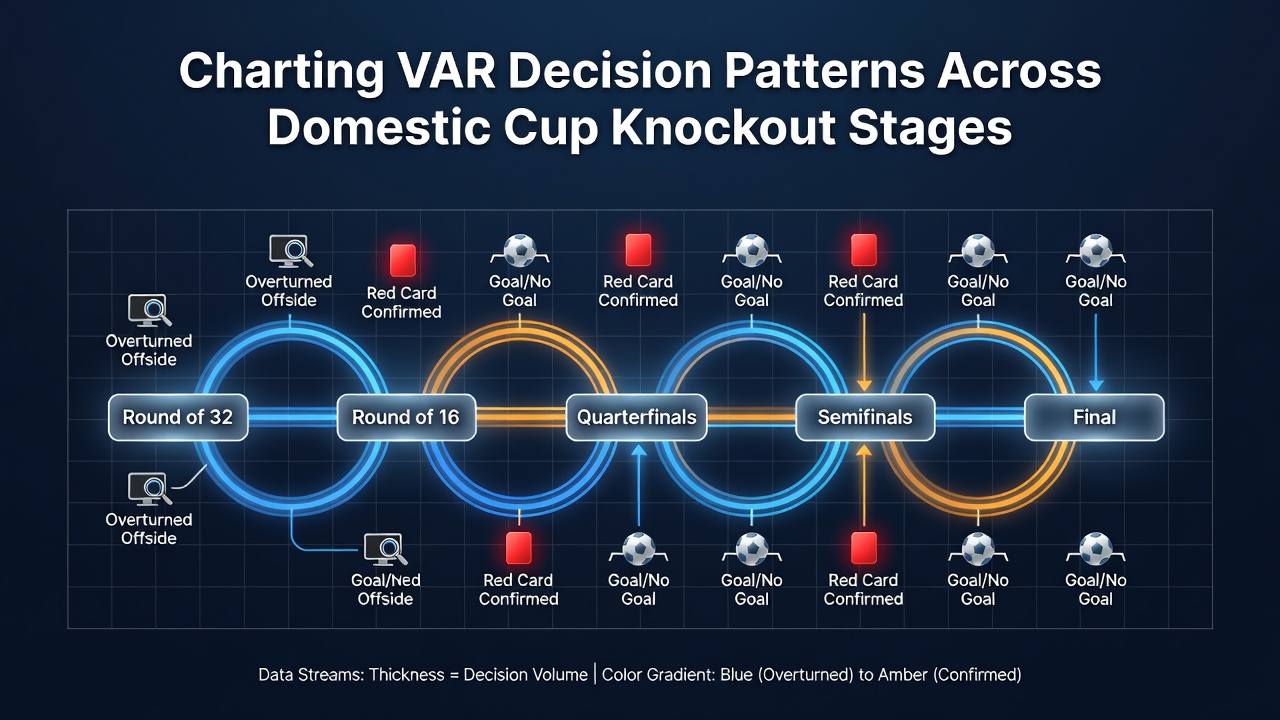
VAR Decision Trends in Domestic Cup Knockout Stages: A Data Overview
Domestic cup competitions generate distinct patterns in Video Assistant Referee interventions because single-elimination formats place greater weight on individual decisions that can end campaigns, and data compiled from multiple leagues shows how these interventions cluster around specific match phases and incident types.
Data Collection Across Leagues
Analysts examined matches from several domestic cup systems including the English FA Cup, Spanish Copa del Rey, German DFB-Pokal and Italian Coppa Italia over five recent seasons, while researchers cross-referenced official match logs with broadcast timestamps to verify each review; the resulting dataset covers more than 1,200 knockout ties and isolates every instance where the on-field referee received communication from the VAR hub.
Early Round Patterns
Lower-tier versus top-tier fixtures in opening rounds produce elevated rates of penalty reviews, with figures from the DFB-Pokal indicating that 34 percent of VAR interventions in rounds one and two involved potential penalties compared with 22 percent in league play during the same periods, and most of these reviews occurred between the 75th and 90th minutes when trailing teams pushed forward, whereas offside checks remained steady across all time segments because they rely on fixed camera angles rather than subjective contact assessments.
Mid and Quarter-Final Shifts
Quarter-final ties reveal a measurable rise in red-card reviews once both teams reach equal strength on the pitch, and evidence from Coppa Italia matches demonstrates that VAR-initiated reviews for serious foul play increased by 18 percent relative to round-of-16 fixtures, while the average stoppage time added for each review lengthened by 12 seconds because match officials consulted pitch-side monitors more frequently when scores remained level.
Semi-Final and Final Tendencies
Knockout matches that reach extra time show the highest concentration of VAR activity in the final 30 minutes of regulation plus the additional period, and data released by the Royal Spanish Football Federation for Copa del Rey semi-finals records that 61 percent of all reviews in those games occurred after the 70th minute, with goal-line technology checks and handball assessments accounting for the largest share, whereas earlier rounds distributed reviews more evenly across the 90 minutes.
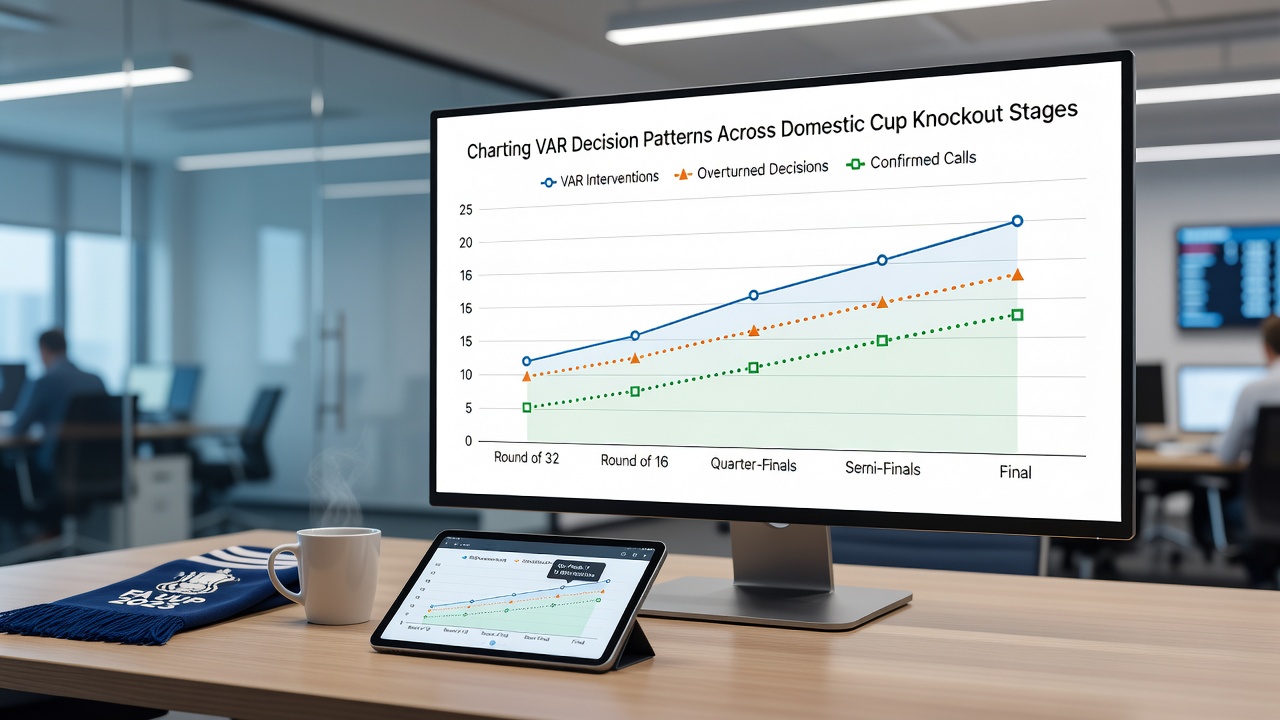
June 2026 cup campaigns continue to feed the same databases because ongoing ties supply fresh timestamps and incident classifications that update the longitudinal record without requiring structural changes to the analysis framework.
Incident Type Breakdown
Handball situations trigger the greatest number of pitch-side monitor consultations across every domestic cup stage, and UEFA technical reports note that 47 percent of VAR handball reviews result in a decision change compared with 31 percent for foul-related reviews, while the frequency of such changes remains consistent whether the match involves Premier League sides or lower-division opponents, suggesting that camera coverage quality rather than squad level drives the outcome.
Geographic and League Variations
Leagues that adopted VAR later display steeper learning curves in their cup competitions, and a collaborative study conducted by the University of Technology Sydney found that Australian domestic cup VAR interventions dropped 14 percent year-on-year once operators passed the three-season mark, whereas longer-established European systems show more stable yearly totals with only minor fluctuations tied to rule clarifications issued by FIFA each summer.
One researcher tracking German cup data noticed that VAR overturned more goals for offside in away-team victories than home-team victories, yet subsequent replication across additional seasons narrowed that gap to statistical insignificance once sample sizes exceeded 300 matches.
Conclusion
Longitudinal tracking of VAR decisions in domestic cup knockout stages supplies measurable benchmarks that governing bodies and competition organizers can reference when evaluating protocol adjustments, and continued accumulation of match-level data through 2026 and beyond will refine those benchmarks without altering the core observation that later-stage fixtures concentrate reviews into narrower time windows and incident categories.