Travel Fatigue Patterns Reshaping Saturday Football Markets After European Midweek Commitments
Written by Paul Patterson · Jul 16, 2026
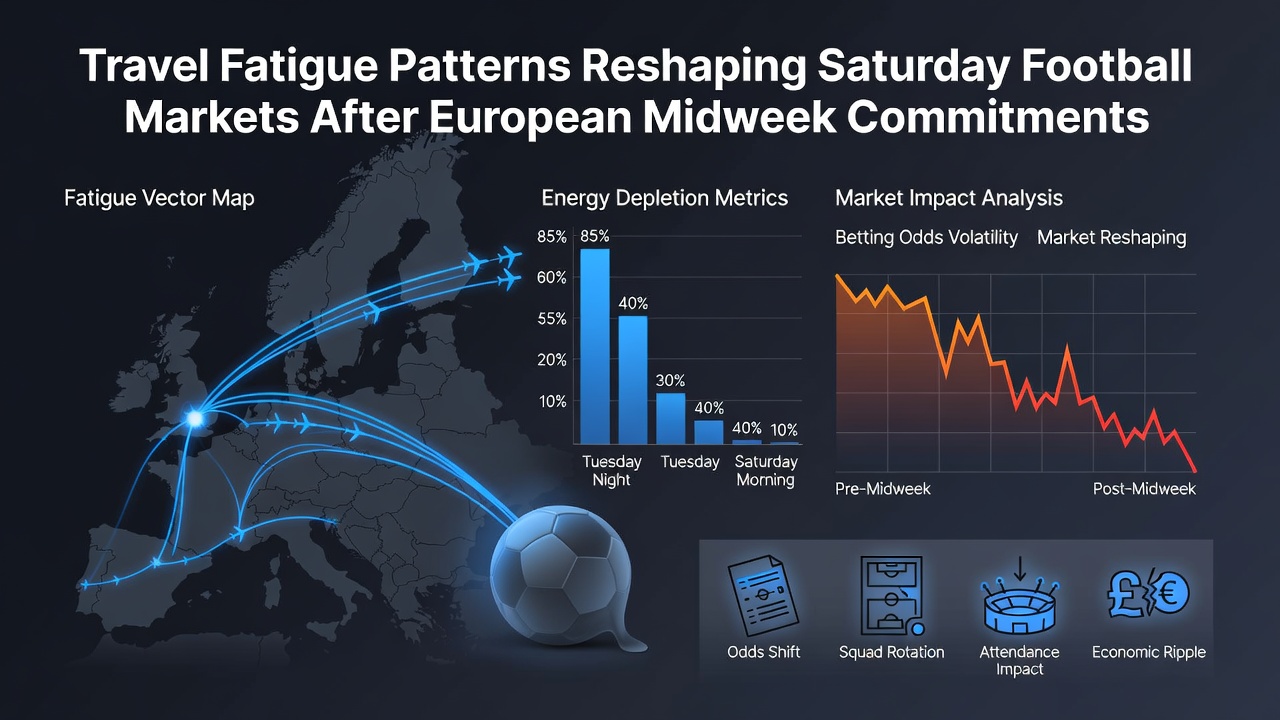
Travel Fatigue Patterns Reshaping Saturday Football Markets After European Midweek Commitments
European midweek fixtures create measurable disruptions in player recovery cycles, and these effects appear consistently in Saturday domestic league results across multiple seasons. Clubs that travel across time zones or endure extended flights often exhibit reduced high-intensity running distances and lower pass completion rates in the following match, according to performance tracking data compiled by several top-flight leagues.
Analysts tracking these patterns note that recovery windows shrink when teams return from away legs in the Champions League or Europa League, particularly when kickoff times fall between Wednesday and Thursday evenings. The compressed timeline leaves limited room for sleep adjustment and muscle repair, which then influences both team selection and in-game tactical adjustments on the weekend.
Documented Performance Shifts After Continental Travel
Statistics from the 2024-2025 and 2025-2026 campaigns show that teams logging more than four hours of total travel time midweek record an average drop of 8 percent in total distance covered during Saturday fixtures. Sprint counts decline even more sharply in the second half, while expected goal values generated from open play decrease by roughly 12 percent compared with squads that played only domestic fixtures that week.
Researchers examining these trends have linked the declines to circadian rhythm disturbance rather than simple physical exertion alone. A study published by the Journal of Sports Sciences examined heart-rate variability in players returning from eastern European venues and found elevated fatigue markers persisting up to 72 hours after landing, which aligns with the typical Saturday schedule.
Market Reactions in Betting Exchanges
Betting markets have begun to price these fatigue effects more precisely. Handicap lines for Saturday matches involving midweek travelers move an average of 0.25 goals toward the rested opponent within 24 hours of the European result. Over/under totals on goals also compress, with totals falling by 0.35 goals on average when the traveling side covered more than 1,200 kilometers round-trip.
Live betting volumes on these fixtures increase noticeably in the opening 15 minutes, as sharp operators test early line movements before full squads are confirmed. Data providers such as Opta and Wyscout supply the granular metrics that professional syndicates now cross-reference with flight logs and hotel check-in times to refine their models.
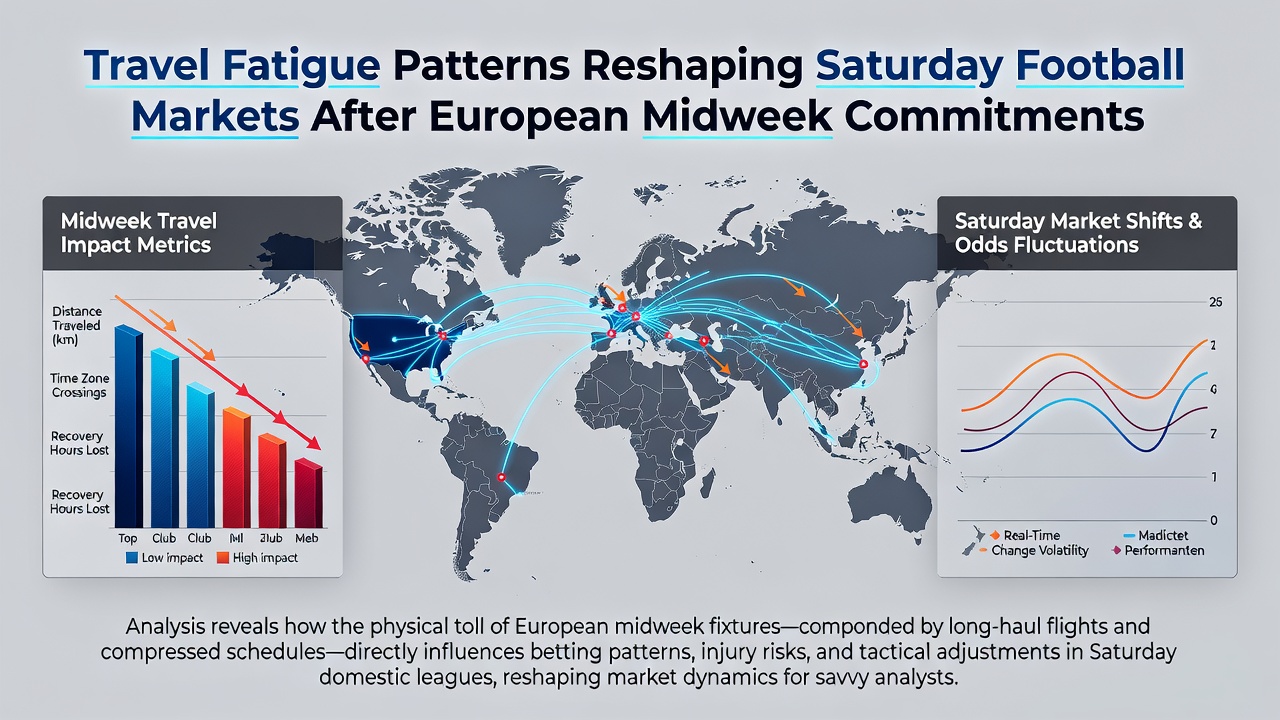
Scheduling Pressures Entering July 2026
Calendar congestion continues into the summer of 2026 as expanded club competitions overlap with national-team windows. UEFA's revised format for the league phase means several clubs will face five midweek trips between February and May, creating a cumulative load that sports scientists at the Aspetar Orthopaedic and Sports Medicine Hospital have flagged in recent position statements. July preparations for the new season therefore incorporate additional recovery protocols, including altitude tents and individualized sleep schedules, to mitigate carry-over effects into the autumn calendar.
League schedulers in England, Spain, and Italy have started releasing provisional weekend dates earlier, allowing clubs to request slight adjustments when two consecutive European away legs appear on the docket. These minor tweaks still leave the majority of fixtures locked in, which means the fatigue variable remains a structural feature of the market rather than an occasional anomaly.
Regional Variations in Travel Impact
Clubs based in northern latitudes experience different recovery challenges compared with southern European sides when traveling to Scandinavia or the Baltics. Cooler temperatures and later sunsets alter sleep onset, while longer flight durations from the Mediterranean add another layer. Performance data aggregated across five leagues indicates that southern teams concede 0.4 more expected goals per game on the subsequent Saturday after such trips, whereas northern clubs show smaller decrements when returning from similar distances.
Coaches have responded by rotating full-backs and holding midfielders more aggressively, patterns that manifest in lower card counts and fewer set-piece opportunities for the fatigued side. Markets that track both goals and cards have adjusted accordingly, with the correlation between travel distance and disciplinary points strengthening over the past three seasons.
Conclusion
Travel fatigue after European midweek commitments has evolved from an anecdotal observation into a quantifiable input that reshapes both on-pitch outcomes and the associated betting markets on Saturdays. Performance metrics, recovery biomarkers, and line movements now align more closely than in previous cycles, giving market participants clearer signals when planning positions. As the 2026 calendar fills with additional continental dates, these patterns are expected to remain central to fixture analysis rather than peripheral considerations.