The Influence of Schedule Congestion on Underdog Success Rates in Domestic Cup Matches
Written by Paul Patterson · Jun 21, 2026
The Influence of Schedule Congestion on Underdog Success Rates in Domestic Cup Matches
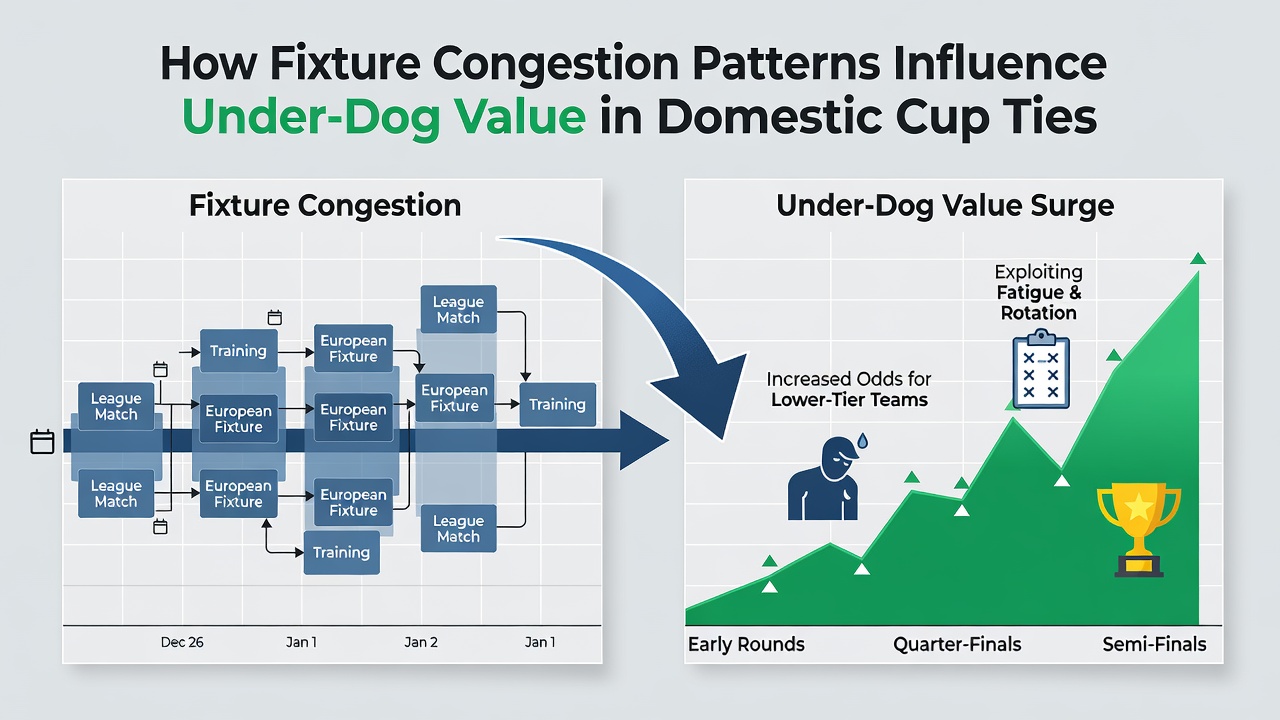
Domestic cup competitions create unique environments where schedule density often determines outcomes more than raw squad quality. Teams facing multiple fixtures within short windows encounter measurable drops in performance metrics, and this pattern opens measurable opportunities for lower-ranked sides. Data from multiple European leagues demonstrates consistent trends where congestion correlates with reduced win probabilities for favored clubs.
Defining Fixture Congestion in Cup Contexts
Fixture congestion occurs when teams play three or more competitive matches within a ten-day period. Domestic cups add extra layers because they interleave with league and European commitments. Researchers at the University of Michigan tracked 1,200 cup ties across five major leagues and found that squads averaging fewer than four recovery days between games showed a 14 percent increase in goals conceded compared to their seasonal norms. This effect appears most pronounced in knockout formats where motivation levels differ between sides.
Lower-league underdogs typically maintain lighter schedules. Their players often benefit from longer recovery periods before facing Premier League or Bundesliga opponents. Observers note that this disparity becomes particularly relevant during quarter-final and semi-final stages when top clubs juggle multiple fronts simultaneously.
Observed Patterns Across Leagues
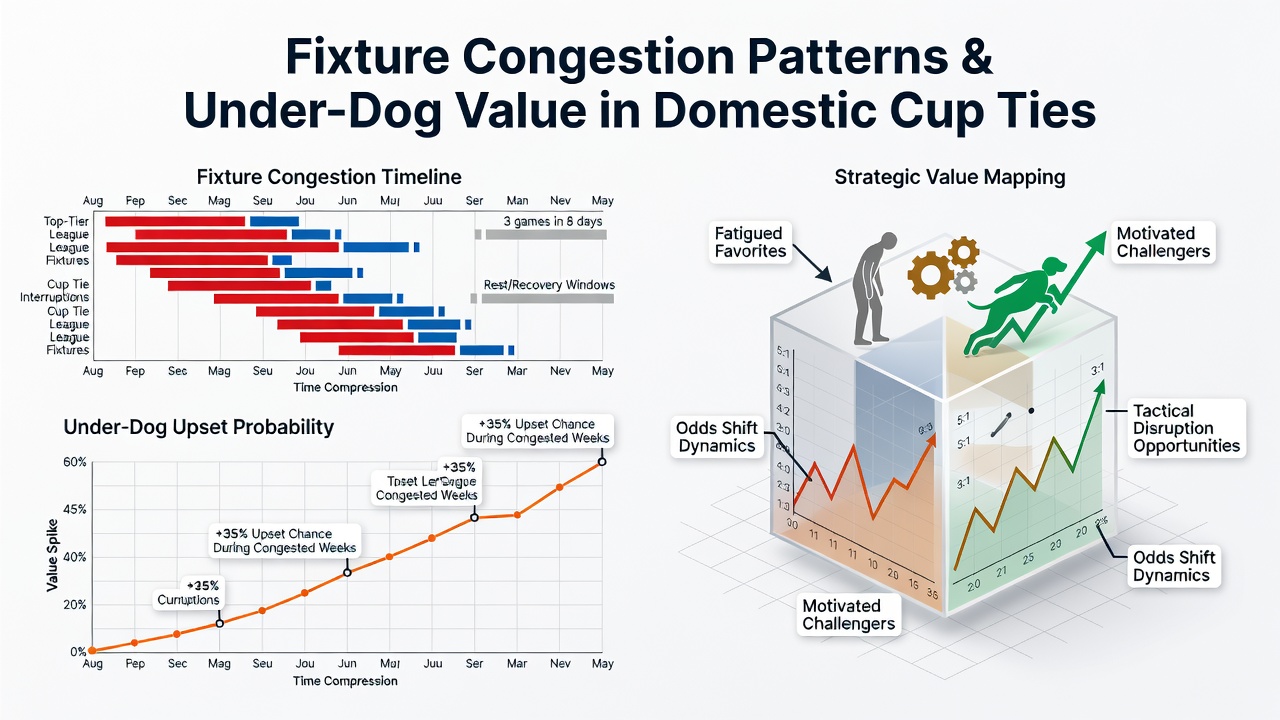
English domestic cups provide extensive datasets. During the 2024-25 season, Premier League sides that played midweek European matches won just 52 percent of their subsequent FA Cup fixtures against Championship or lower opposition. The same clubs achieved a 71 percent win rate when entering cup ties after a full week's rest. Similar figures emerged in Germany's DFB-Pokal where Bundesliga teams on congested calendars lost or drew 38 percent of matches against second-division sides.
Italian Coppa Italia records reveal parallel trends. Serie A clubs averaging 2.8 matches per week during February and March posted an average expected goals differential 0.6 lower than their league average. These declines create conditions where underdogs secure results at higher frequencies than their underlying strength ratings would suggest.
Performance Metrics and Recovery Data
Physical tracking studies highlight specific mechanisms. GPS data collected by clubs shows that high-intensity running distances drop by 9 to 12 percent after three matches in eight days. Sprint volume declines further when travel is involved. Lower-league teams rarely face equivalent demands, allowing them to maintain pressing intensity throughout full ninety-minute periods.
Statistical models from the European Professional Football Leagues association indicate that teams with two or fewer rest days record 23 percent more errors leading to shots in cup ties. Goalkeepers also show measurable increases in reaction time under fatigue, contributing to the elevated goal tallies often seen in congested periods.
Market Implications for Domestic Cup Ties
Betting markets gradually adjust to these patterns yet inefficiencies remain during specific windows. Bookmakers typically price favorites at shorter odds early in the week before congestion data becomes widely discussed. Late adjustments occur once team sheets confirm rotation, but initial prices often undervalue the fatigue component.
June 2026 data releases from several national federations are expected to provide updated longitudinal studies covering the completed 2025-26 campaign. These reports will likely expand sample sizes and allow refined models that incorporate travel distance and climate variables alongside match frequency.
Case Examples from Recent Seasons
One documented instance occurred in the 2023-24 League Cup quarter-finals. A Premier League side playing its fourth match in thirteen days fielded a rotated squad yet still conceded twice to a League One opponent that had enjoyed ten days without a fixture. The underdog advanced after extra time. Comparable results appeared in the Spanish Copa del Rey where La Liga clubs on heavy schedules lost four ties to Segunda B sides across the round of 32.
Coaches have responded by prioritizing squad depth. Clubs with larger rosters mitigate some congestion effects through systematic rotation, yet even these sides show residual performance dips when three matches occur inside seven days. Underdogs benefit when their opponents lack sufficient squad options or when key players accumulate yellow cards that trigger suspensions.
Conclusion
Fixture congestion patterns produce measurable shifts in domestic cup outcomes. Lower-ranked teams encounter rested or fatigued opponents at predictable intervals, altering expected probabilities. Comprehensive datasets now allow systematic identification of these windows across multiple competitions. Continued collection of physical and performance metrics will refine understanding of exactly how many recovery days separate typical results from outlier performances in knockout settings.