Referee Discipline Patterns Provide Edges in European Football Card Betting Markets
Written by Xander Becker · Aug 18, 2026
Referee Discipline Patterns Provide Edges in European Football Card Betting Markets
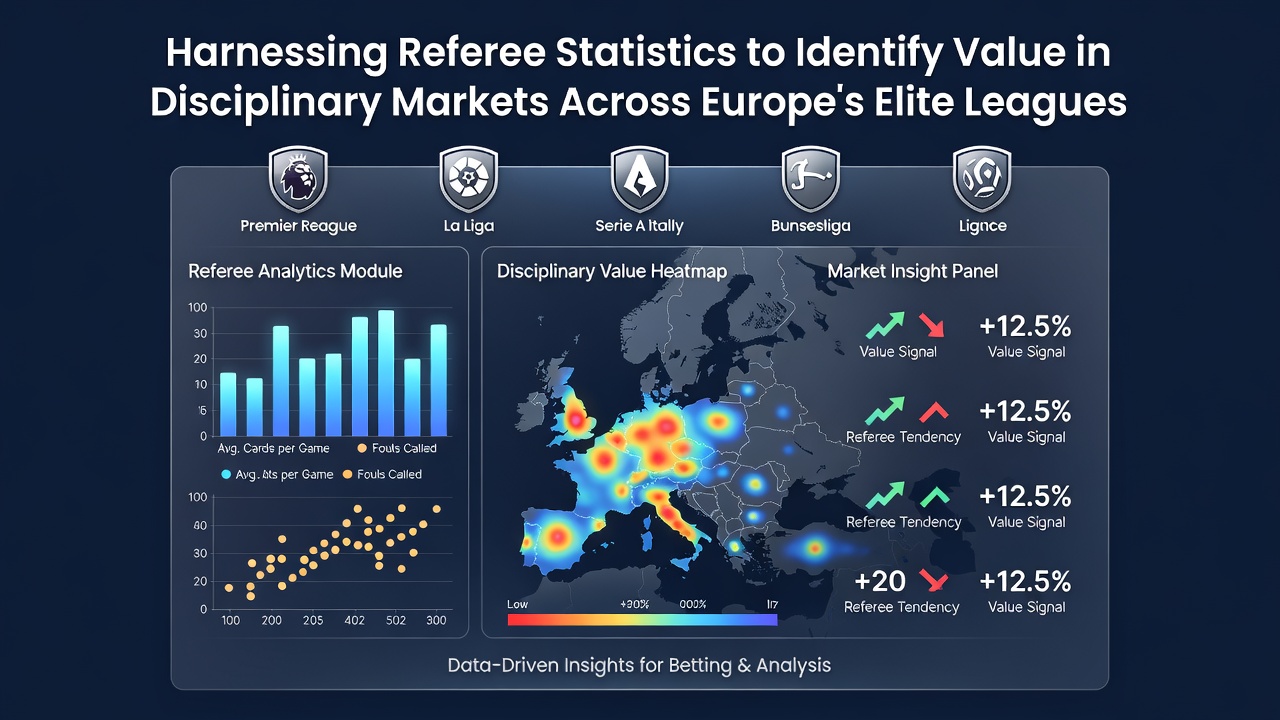
European football leagues present distinct patterns in disciplinary actions that analysts track through detailed referee performance data, and those records allow identification of consistent trends across the Premier League, La Liga, Serie A, Bundesliga, and Ligue 1. Observers note that referees maintain measurable averages for cards issued per match, and these figures shift based on league styles, match contexts, and individual official histories. Data collected over multiple seasons shows how certain officials favor stricter enforcement while others permit more physical play before reaching for their pockets.
Tracking Individual Referee Metrics
Statistics compiled by professional data providers reveal wide variation among officials, with some averaging over five yellow cards per game across a full campaign while others stay closer to three. Analysts cross-reference these numbers against specific conditions such as home versus away fixtures, high-stakes derbies, and matches involving teams known for aggressive pressing styles. The resulting profiles highlight referees whose card counts rise sharply when certain teams appear on the schedule, creating measurable edges for those who study the distributions carefully.
August 2026 marks the start of another full season where updated referee assignments become available early, allowing fresh data layers to be added to existing models before the first matchweek concludes. Researchers who follow these releases point out that early-season adjustments often reflect changes in league directives on physical contact, and those shifts appear first in the card counts of officials who handle opening fixtures.
League-by-League Variations in Card Trends
Each competition maintains its own baseline for disciplinary volume, and Serie A traditionally records higher average cards than the Bundesliga, where play flows more openly according to long-term league reports. La Liga shows elevated rates during weekend rounds compared with midweek Copa del Rey ties, whereas Ligue 1 data indicates spikes when matches involve clubs from the lower half of the table. These differences emerge clearly when statisticians segment results by competition rather than pooling all European fixtures together.
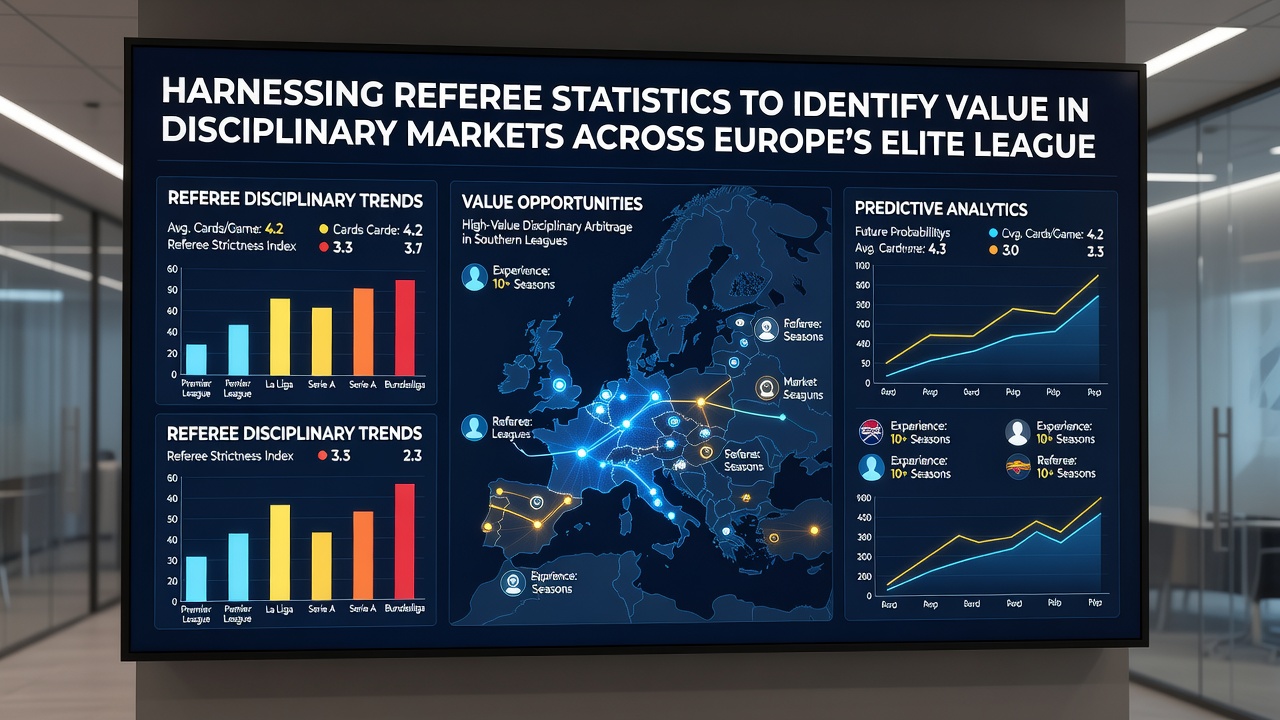
Take one dataset released by a sports analytics firm that compared over 2,000 matches across five leagues and found that certain referees issue red cards at twice the league average when officiating away from their home country in UEFA competition. Those elevated rates translate directly into market movements for player-specific card bets and team total cards, particularly when the official in question has a documented history of strict interpretations of challenge timing.
Applying Data to Market Opportunities
Bookmakers adjust lines for cards based on expected attendance, weather forecasts, and team news, yet referee-specific histories often remain underweighted until late in the week. Observers who maintain updated spreadsheets on card averages per referee per league find discrepancies between published odds and historical outcomes in roughly one in five fixtures. The gaps appear most frequently in over-card markets when a high-card official receives an assignment involving two sides that rank among the league leaders in fouls committed.
Academic studies published in the European Sport Management Quarterly examined referee consistency across multiple countries and confirmed that card differentials persist even after controlling for team strength and match importance. Similar findings appear in reports issued by the Australian Sports Commission research division, which analyzed disciplinary data from European competitions to test predictive models for betting applications.
Integrating Contextual Factors
Match location, time of day, and recent team form all interact with referee tendencies, and analysts combine these variables into layered projections rather than relying on raw averages alone. A referee who averages 4.8 cards at home grounds may drop below four when traveling to stadiums with larger pitches, and that adjustment matters when lines sit near the historical mean. Teams that rotate heavily after European midweek games also produce fewer fouls in the following domestic fixture, which can offset an official's stricter baseline and keep totals closer to the lower end of the expected range.
Conclusion
Referee statistics supply a quantifiable foundation for evaluating disciplinary markets, and the patterns hold across Europe's elite leagues when tracked with sufficient granularity. Updated assignments released each August provide the latest inputs for models that already incorporate league baselines, individual tendencies, and situational modifiers. Those who compile and apply these datasets continue to identify measurable discrepancies between available odds and historical frequencies in card-related betting options.