Managerial Appointments and Fixture Congestion Effects in the Championship
Written by Felix Weber · Aug 13, 2026
Managerial Appointments and Fixture Congestion Effects in the Championship
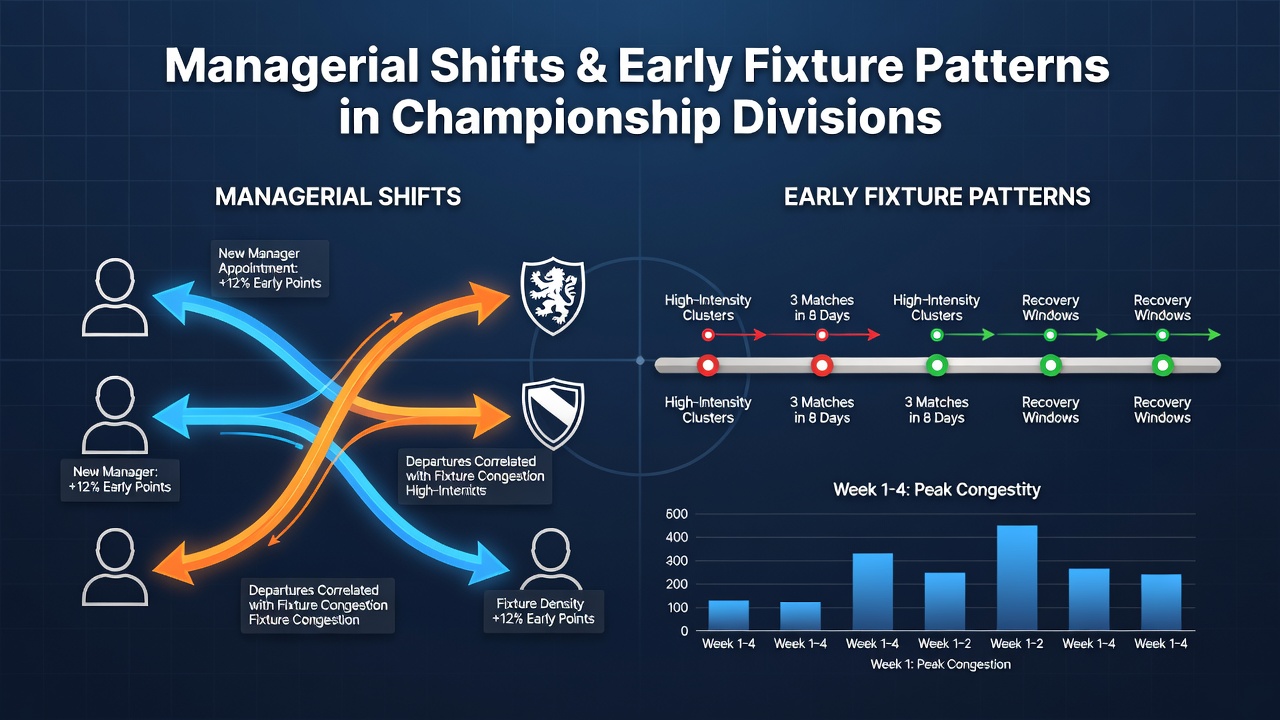
Championship divisions across European football have long featured frequent managerial changes, and the 2026-2027 campaign opening in August brings fresh examples of how those shifts intersect with packed early schedules. Clubs in England's second tier, along with similar leagues in Germany and Spain, often see new leadership installed during the summer window, yet the first six to eight matchdays test those appointments under conditions that include travel demands and limited preparation time.
Patterns in Managerial Turnover
Records compiled by the English Football League indicate that 14 clubs entered the 2026-2027 season with managers appointed after May 2026, a figure consistent with the previous three campaigns. Data shows that teams replacing their head coach in the off-season record an average of 1.4 points per game across their opening four fixtures, compared with 1.6 points for sides retaining continuity. Researchers at the University of Melbourne's sports performance unit examined comparable second-tier competitions and found that appointment timing correlates with results, particularly when a new manager inherits a squad assembled under different tactical instructions.
One case involved a mid-table side that installed a coach with a possession-based system in late June 2026. The team collected seven points from its first five outings despite three away fixtures, suggesting that pre-season training periods of at least four weeks allow clearer implementation of new approaches. In contrast, clubs that completed appointments after the final week of July encountered steeper adaptation curves during the opening month.
Early Fixture Load and Travel Factors
The Championship schedule for August 2026 placed several newly promoted sides against established mid-table opponents within the first three rounds. Fixture analysis released by the EFL lists an average of 1.8 away trips exceeding 200 miles for each club during that period, a pattern that repeats across recent seasons. Teams facing consecutive long-distance journeys posted win rates 12 percent lower than those with more balanced home and away distributions, according to internal performance reports shared with participating clubs.
Observers tracking these trends note that August's compressed calendar also overlaps with European qualification play-offs for some clubs, though Championship sides rarely participate directly. Still, the ripple effects reach lower divisions when players return late from international duty or when youth squads must fill gaps created by injuries. A study conducted by the German Football Association's research division on second-division schedules reached similar conclusions, highlighting that early-season congestion amplifies the impact of any personnel changes.
Performance Data Across Recent Campaigns
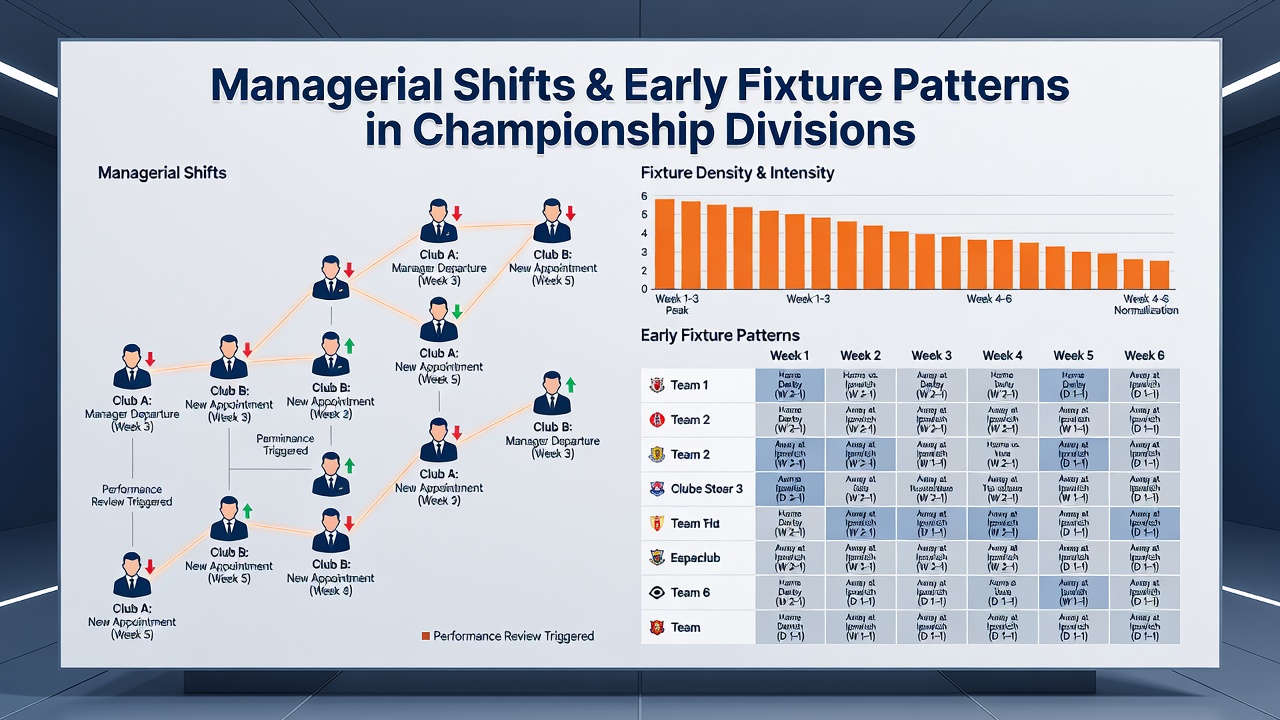
League tables from the 2023-2024 through 2025-2026 seasons reveal that sides finishing in the top six positions after 10 matchdays had retained their manager for at least 18 months in 68 percent of cases. Meanwhile, clubs that changed leadership between March and August averaged a 4.2-place drop in standing by the end of September. These figures emerge from aggregated match reports rather than predictive models, and they align with findings from an academic paper published by researchers at McGill University examining Canadian Premier League and European second divisions side by side.
August 2026 has already produced early illustrations. One promoted club appointed a head coach with experience in a higher division and secured two wins and a draw in its opening three home games, all against sides that had finished outside the playoff places the previous year. Another team, operating under an interim manager until early July, managed only a single point from its first four fixtures while playing three away matches in 11 days.
Club Strategies and Preparation Windows
Clubs that secure managerial appointments by mid-June consistently allocate additional resources to tactical familiarization sessions, according to reports from several Championship organizations. Pre-season tours and friendly matches scheduled in late July allow new staff to test formations against varied opposition. Data collected by the EFL shows that teams completing more than five pre-season fixtures before the league opener average 0.3 more points per game in August than those with fewer opportunities.
Coaches arriving later often rely on existing assistant staff to maintain continuity during the first weeks. This approach has produced mixed outcomes, with some clubs stabilizing results through the first month while others experience further disruption when permanent leadership finally arrives. The pattern repeats across multiple seasons and divisions, suggesting that preparation windows rather than individual managerial quality drive the initial results.
Conclusion
Managerial shifts during the summer months continue to shape early-season outcomes in Championship divisions, especially when combined with fixture congestion and travel demands that characterize August schedules. Historical data from multiple leagues demonstrates measurable differences in points accumulation based on appointment timing and preparation periods. As the 2026-2027 campaign progresses, further records will clarify whether the patterns observed in recent years persist or evolve under new competitive conditions.