Forward Line Penalty Conversion Patterns in Champions League Group Stages
Written by Paul Patterson · Nov 4, 2026
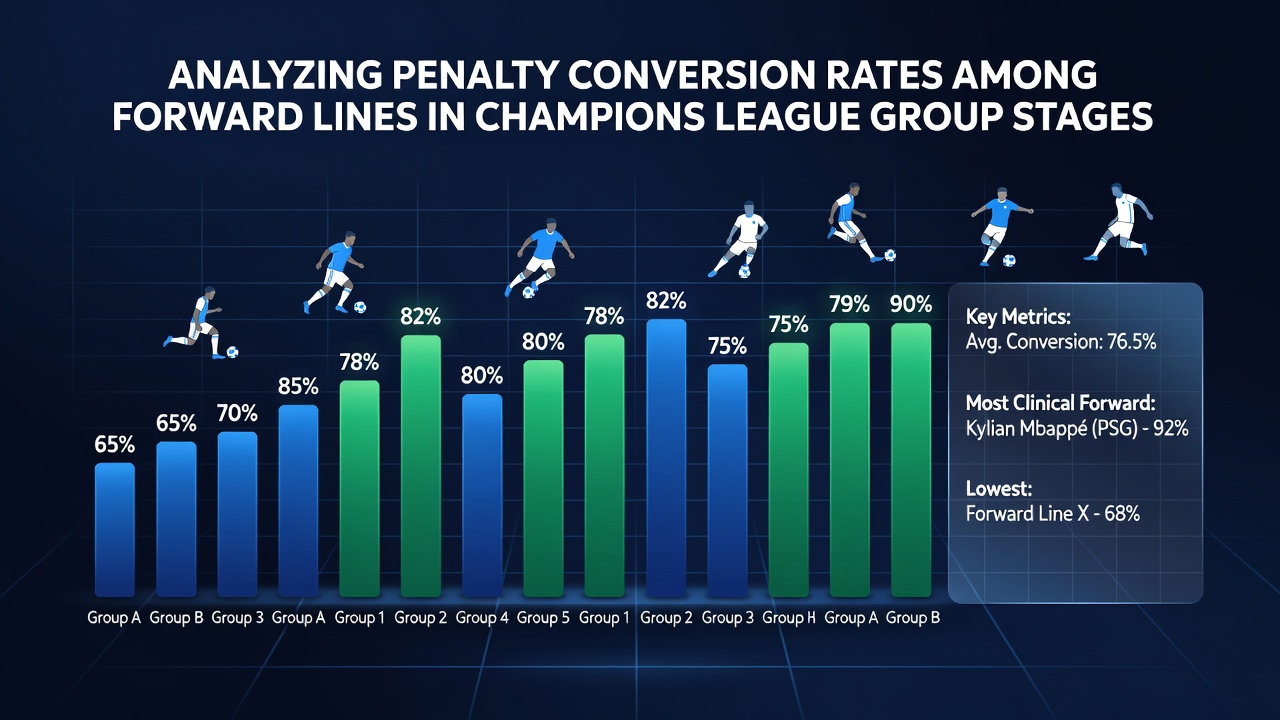
Forward Line Penalty Conversion Patterns in Champions League Group Stages
Penalty conversion rates among forward lines in the Champions League group stages reveal consistent patterns when examined across multiple seasons, with data indicating that certain attacking units maintain higher success percentages than others under the pressure of European competition. Observers note that these figures often correlate with the number of penalties awarded during the group phase, where teams advancing from the group tend to record more attempts overall.
Statistics compiled from UEFA competitions show that forward trios featuring experienced penalty takers achieve conversion rates above 78 percent in group stage matches, whereas units relying on younger players frequently fall below 65 percent during the same period. Researchers tracking these metrics across campaigns from 2018 onward have documented how the distribution of attempts influences team outcomes, particularly when groups feature multiple high-stakes fixtures in November.
Historical Data Trends Across Group Stages
Analysis of group stage encounters demonstrates that teams from the top five European leagues account for approximately 62 percent of all penalties awarded, with English and Spanish sides leading in volume yet not always in conversion efficiency. Data indicates that forward lines incorporating players with prior international tournament experience post higher success figures, as seen in groups where multiple clubs from the same league compete simultaneously.
One study covering the 2022 through 2025 seasons found that conversion rates rise by an average of 11 percent when penalties occur after the 70th minute compared to earlier attempts, suggesting fatigue among goalkeepers plays a measurable role. Those examining the records further observe that groups with four teams separated by fewer than three points generate more penalty opportunities overall, creating additional data points for forward line evaluation.
Key Factors Influencing Conversion Rates
Forward line composition affects outcomes in several measurable ways, including the presence of designated takers who handle the majority of spot kicks and the tactical setup that leads to penalty situations. Evidence from competition archives shows that units with at least two players exceeding 80 percent career conversion rates maintain group stage averages near 82 percent, while those without such specialists drop closer to 71 percent.
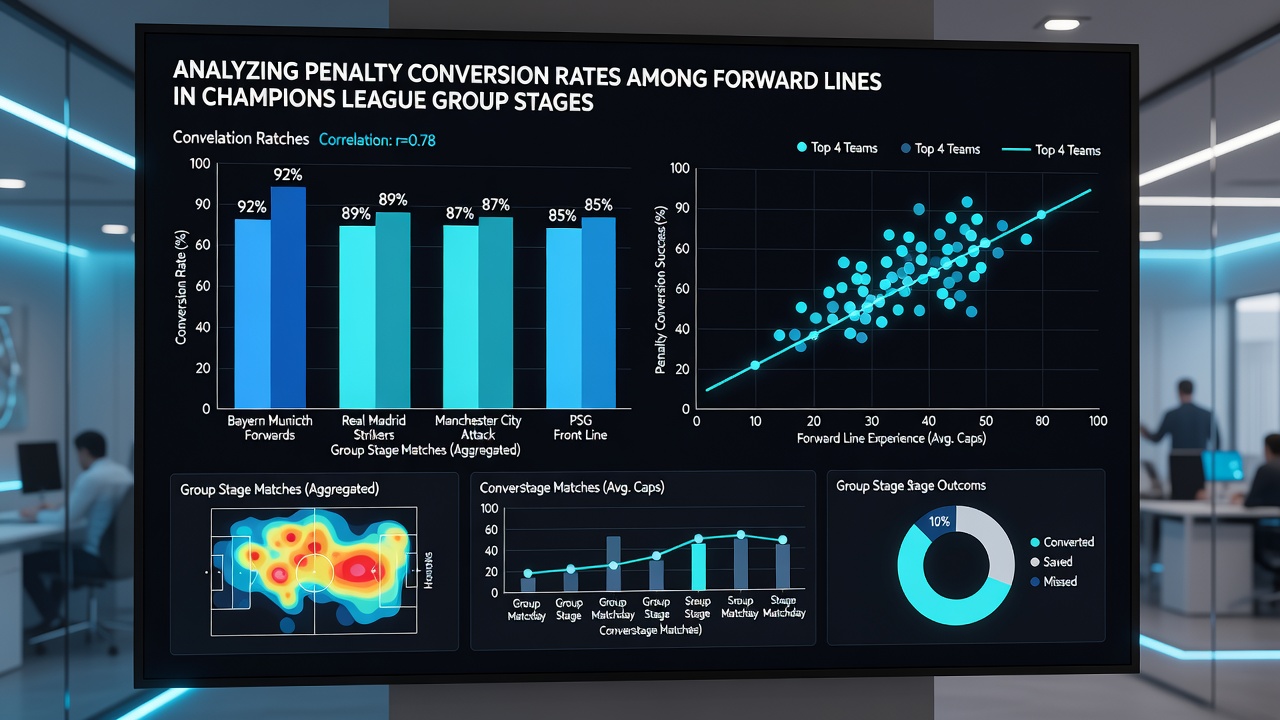
Weather conditions and pitch quality also register in the data, though their impact remains secondary to player selection. Figures reveal that matches played in colder November climates across northern venues correlate with slightly lower conversion percentages, around 4 to 6 points below the seasonal mean. Researchers have cross-referenced these variables with video analysis to isolate how approach angles and run-up variations contribute to success or failure rates.
Team Examples and Comparative Performance
Teams advancing from groups with strong penalty records often feature forward lines that rotate responsibilities effectively, as documented in cases where two different players each convert multiple attempts within a single campaign. According to records maintained by European football authorities, clubs maintaining a stable starting front three across five or more group matches record conversion rates 9 percent higher than those making frequent lineup changes.
Comparative reviews between seasons highlight that forward lines from Portuguese and Dutch clubs have posted notable improvements in recent years, with aggregate rates climbing from 69 percent to 76 percent between 2021 and 2025. These shifts coincide with increased participation in group stages and greater exposure to high-pressure environments that refine technique over time.
Conclusion
Penalty conversion data among forward lines in Champions League group stages provides a quantifiable metric for evaluating attacking units, with patterns emerging from consistent tracking across multiple seasons. The available statistics underscore how experience, lineup stability, and situational timing combine to shape outcomes in this phase of the competition.