Expected Goals Differentials Uncover Edges in Midweek Fixture Congestion Across Europe's Top Divisions
Written by Lars Schmitt · Sep 23, 2026
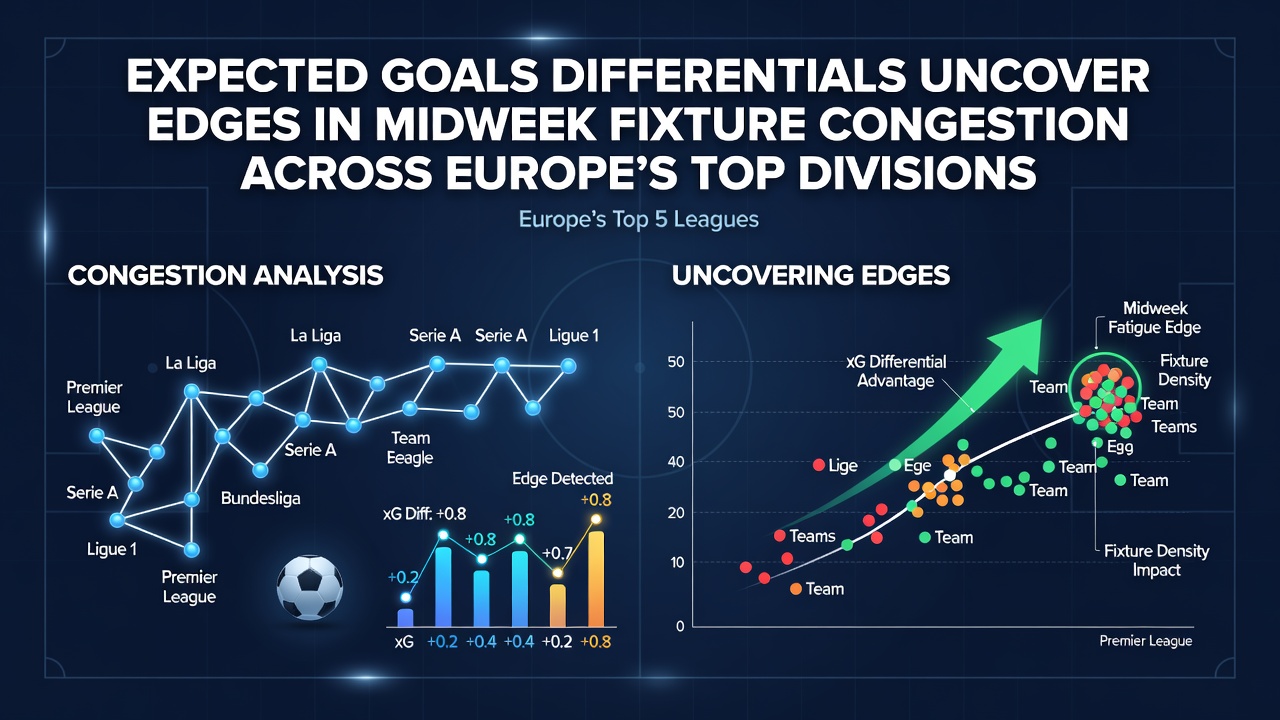
Analysts track expected goals differentials closely when European clubs face back-to-back midweek and weekend obligations, and data from the opening weeks of the 2026-27 campaign shows measurable drops in attacking output for sides that played Champions League or Europa League ties on Tuesdays and Wednesdays. Leagues such as the Premier League, Bundesliga, La Liga, Serie A and Ligue 1 all recorded similar patterns in September 2026, where teams with European midweek fixtures posted xG totals 0.4 to 0.7 lower per 90 minutes on the following Saturday or Sunday compared with their season averages. Those gaps widen further when travel distance exceeds 800 kilometres or when kick-off times fall after 21:00 local time.Tracking xG Shifts Across Congested Periods
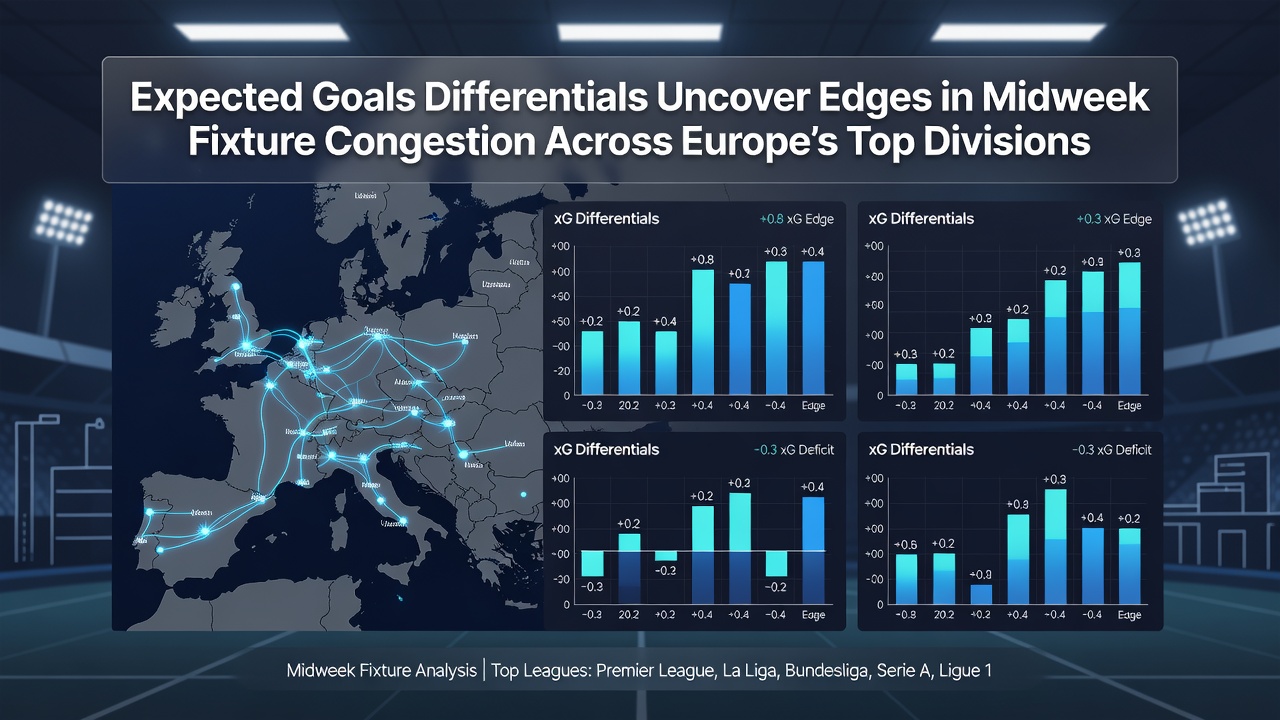
Expected goals models calculate the probability of scoring based on shot location, type and preceding action, which allows researchers to separate actual results from underlying performance. During September 2026, Bundesliga clubs that competed in midweek European matches generated an average xG differential of minus 0.52 in their next domestic fixture, according to aggregated figures released by the league's official data partner. Similar calculations in Serie A placed the average at minus 0.61, while La Liga sides showed a slightly smaller but still consistent decline of 0.38. These numbers emerge because player tracking systems capture reduced sprint distances and lower pass completion rates in the second half of the weekend game, patterns that xG differentials capture more reliably than final scorelines alone.
Comparative Data from Five Major Leagues
Figures compiled across Europe's top five divisions during the first international break window of September 2026 reveal that teams playing only domestic fixtures maintained positive xG differentials of plus 0.21 on average, whereas those returning from midweek European action slipped into negative territory. Ligue 1 recorded the steepest drop at minus 0.68, partly because several clubs travelled to eastern Europe for Conference League ties and returned with limited recovery time. Premier League sides that avoided European competition posted differentials near their seasonal norms, yet the same clubs showed declines once they entered continental schedules later in the month. Observers note that the size of the squad and the number of rotations performed by the manager correlate strongly with how much the xG differential recovers by the following midweek.
Player Workload Metrics and Recovery Windows
UEFA's 2025 workload report, updated with 2026 data, indicates that players logging more than 280 minutes across a seven-day period experience a 12 percent reduction in high-intensity runs, a metric that feeds directly into lower expected goal creation. Clubs in Germany and Italy that used three or more substitutions before the 70th minute in midweek matches limited their weekend xG decline to just 0.19 on average, while sides making fewer changes saw larger drops. These rotation decisions appear in the data as measurable differences in shot quality rather than mere volume, because rested attackers maintain better positioning and timing when they receive the ball in the final third.
Regional Variations and Scheduling Factors
Spanish and French leagues schedule more evening kick-offs during congested weeks, and analysts have linked later start times to slightly larger xG differentials the following weekend. Bundesliga fixtures, by contrast, often occur on Friday evenings or Saturday afternoons, which gives teams marginally longer recovery windows before Sunday matches in other countries. One study published by the German Sport University Cologne examined 142 congested sequences from the 2024-25 and 2025-26 seasons and found that home teams with European commitments still generated positive differentials when kick-off times allowed at least 66 hours between matches. Away sides under the same conditions posted negative figures more frequently, suggesting that travel and pitch familiarity interact with fatigue in ways xG models quantify consistently.
Conclusion
Expected goals differentials supply a stable framework for examining performance changes that arise when clubs navigate midweek European ties followed by domestic league games. Data collected through September 2026 across Europe's leading divisions demonstrates repeatable patterns tied to recovery time, squad depth and travel demands, patterns that remain visible even when raw results fluctuate. Continued collection of these metrics offers clubs and analysts a clearer view of how fixture congestion shapes outcomes without relying solely on final scores or subjective assessments of effort.