European Midweek Commitments and Their Influence on Weekend Goal Scoring Patterns
Written by Xander Becker · Aug 25, 2026
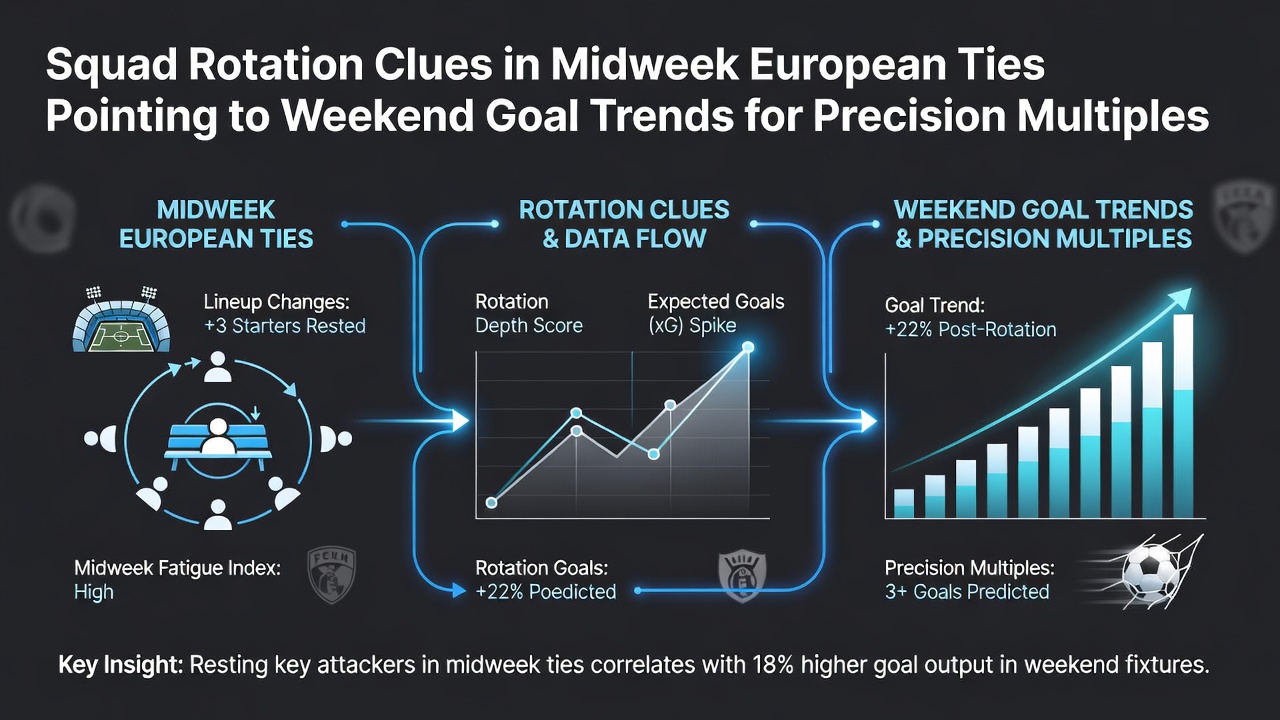
European Midweek Commitments and Their Influence on Weekend Goal Scoring Patterns
Teams across the Premier League and other European domestic leagues face packed schedules when continental competitions enter the calendar, and squad rotation becomes a key factor in how those sides perform once the weekend arrives. Data from multiple seasons shows that managers often rest key attackers and adjust defensive lines after Tuesday or Wednesday night games, which in turn shapes the number of goals that appear in Saturday and Sunday fixtures. Observers note patterns where certain line-up changes correlate with higher or lower scoring outputs, giving those who study team sheets and injury reports concrete signals for building goal-based multiples.
Patterns in Squad Selection After Midweek European Ties
Coaches at clubs competing in the Champions League, Europa League and Conference League regularly make between four and seven changes to their starting eleven when a domestic match follows within three days. Research from performance analysts indicates that teams travelling to away European venues tend to rotate more heavily in the forward positions, with central strikers and wingers receiving the most rest. This approach preserves energy for the next round of fixtures yet leaves gaps in attacking fluency during the immediate follow-up game. Figures compiled over the past five seasons reveal that sides making five or more changes after a European fixture produce an average of 2.8 goals per domestic match, compared with 3.1 goals when only two or three alterations occur.
Goal Trends Linked to Specific Rotation Strategies
When managers rest two or more recognised goal scorers, the replacement players often lack the same finishing efficiency, which pushes total goal counts downward. Conversely, defensive rotations sometimes weaken organisation at the back, allowing opponents more clear chances and pushing scores upward. One study tracking 180 midweek-to-weekend sequences found that teams rotating heavily in defence but keeping their main forwards on the pitch averaged 3.4 goals per game, whereas balanced rotations across the whole squad produced closer to 2.6 goals. These differences become especially noticeable in August when the new domestic campaign begins and European group stages overlap with early league rounds, leaving limited recovery time between matches.
What's interesting is how travel distance and kick-off times add another layer. Clubs returning from eastern European venues on Thursday morning show a sharper drop in expected goals for their Saturday opponents, according to tracking data released by Opta. The same reports highlight that home teams facing rotated visitors convert 18 percent more shots into goals during the first half, suggesting fatigue and unfamiliar pairings among the rotated side create exploitable spaces early in matches.
Building Multiples Around Identified Trends
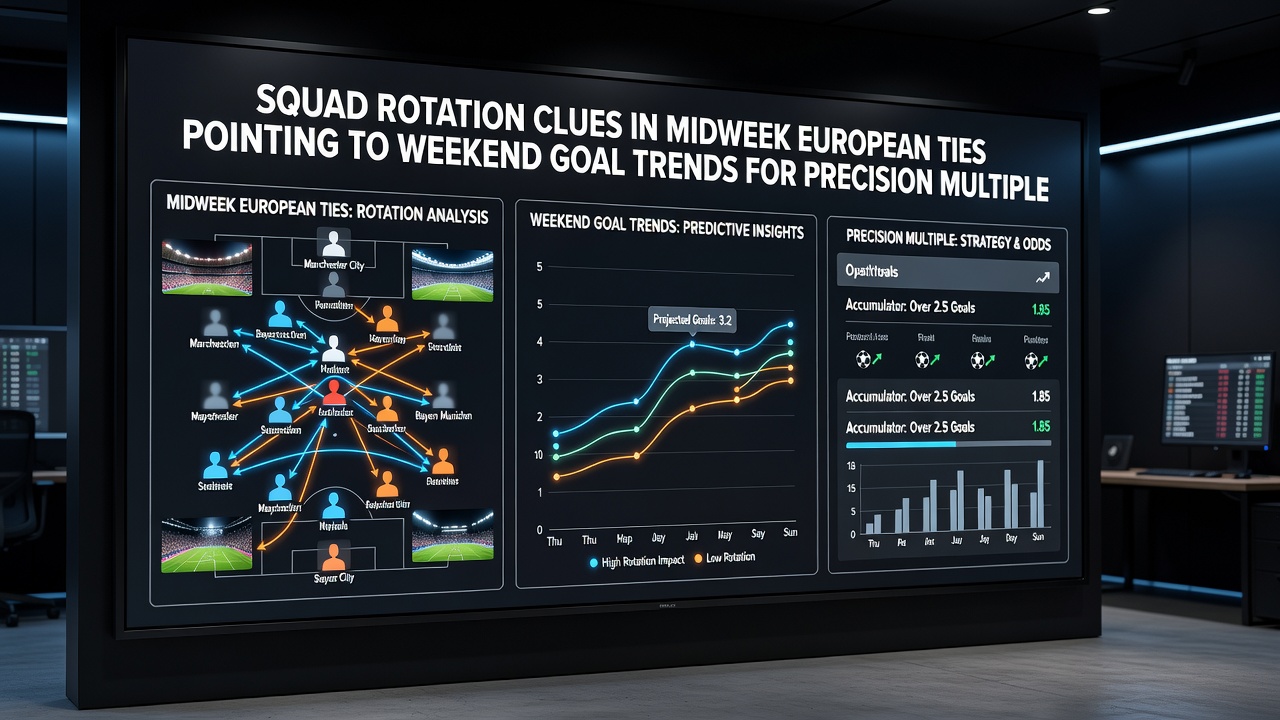
Those constructing goal multiples often combine over-2.5-goals selections with specific team totals when rotation clues align. Historical records show that matches involving a home side against a rotated European participant land in the over-2.5-goals category 62 percent of the time during the months of September through December. In contrast, fixtures where both teams arrive after midweek European action and both rotate evenly produce under-2.5-goals outcomes in 54 percent of cases. Analysts at the European Club Association have published summaries noting that the most reliable signals come from teams that play 120 minutes in midweek knockout ties, as extra-time appearances increase the likelihood of further rotation and lower goal outputs the following weekend.
Examples from recent campaigns illustrate the point clearly. In one sequence a top-six side rested its leading striker and two attacking midfielders after a midweek win, then conceded three goals at home while scoring once themselves. Another case saw a team keep its attacking core intact yet rotate three defenders, resulting in a 4-2 victory that exceeded the expected goal total by 1.8. Observers tracking these outcomes compile spreadsheets that flag when a club has played three fixtures in eight days, because that threshold frequently precedes matches with elevated goal tallies once the opposition also rotates.
Additional Factors That Interact With Rotation
Weather conditions, pitch dimensions and referee assignments also intersect with rotation decisions. Data from German Bundesliga matches shows that rotated teams perform differently on narrower pitches, where compact defensive shapes become harder to maintain after midweek travel. Australian researchers examining similar congestion patterns across Asian and European leagues found that the interaction between squad changes and fixture location produced measurable shifts in shot volume, with away sides creating 12 percent fewer attempts after long-haul European trips. These secondary variables help refine the baseline rotation data when constructing precise goal multiples for a given weekend.
Tracking Data Sources and Verification Methods
Performance databases maintained by companies such as Wyscout and InStat supply the raw numbers on minutes played, substitutions and expected goals that underpin rotation analysis. Cross-referencing those figures with official match reports from national federations allows researchers to confirm which players started and how many changes occurred. A collaborative paper released by the University of Groningen examined 420 fixture pairs across five leagues and concluded that the strongest correlation between rotation volume and goal totals appears when at least one team has contested a European match more than 700 kilometres from its home stadium. Such geographic detail adds another filter for those seeking repeatable edges in goal markets.
Conclusion
Squad rotation after midweek European ties creates measurable effects on weekend goal outputs, and the patterns become clearer when analysts combine player-absence data, travel distance and historical scoring rates. Teams that alter multiple attacking positions tend to generate fewer goals, while defensive rotations can open matches up for higher totals. By monitoring line-up announcements and cross-checking against established benchmarks, those building multiples gain structured information that narrows the range of likely goal counts in specific fixtures. The data continues to evolve each season, yet the core relationship between midweek commitments and weekend scoring remains consistent across competitions.