Atmospheric Pressure: How Crowds Influence Scoring Patterns in Major European Football Leagues
Written by Xander Becker · Jun 16, 2026
Atmospheric Pressure: How Crowds Influence Scoring Patterns in Major European Football Leagues
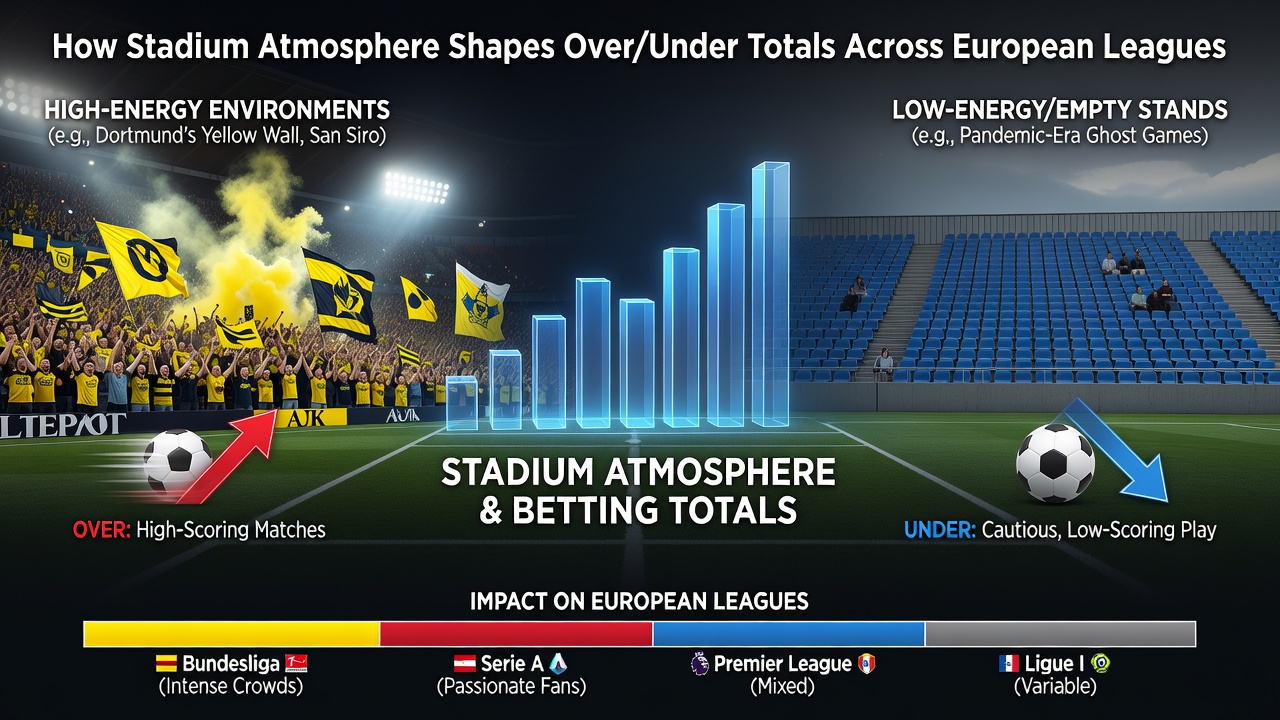
European football stadiums generate distinct environments that correlate with variations in goal totals, and analysts track these patterns across leagues to understand over/under betting markets. Data from multiple seasons shows that crowd density, noise levels, and supporter intensity align with shifts in scoring rates, particularly when comparing home fixtures to neutral or away settings.
Researchers have compiled statistics from the Premier League, La Liga, Bundesliga, and Serie A, revealing that louder home crowds often coincide with fewer total goals in certain contexts while producing more open play in others. These trends emerge from factors such as player concentration under pressure, referee decisions influenced by surrounding sound, and tactical adjustments teams make in response to the environment.
Premier League Crowds and Goal Flow
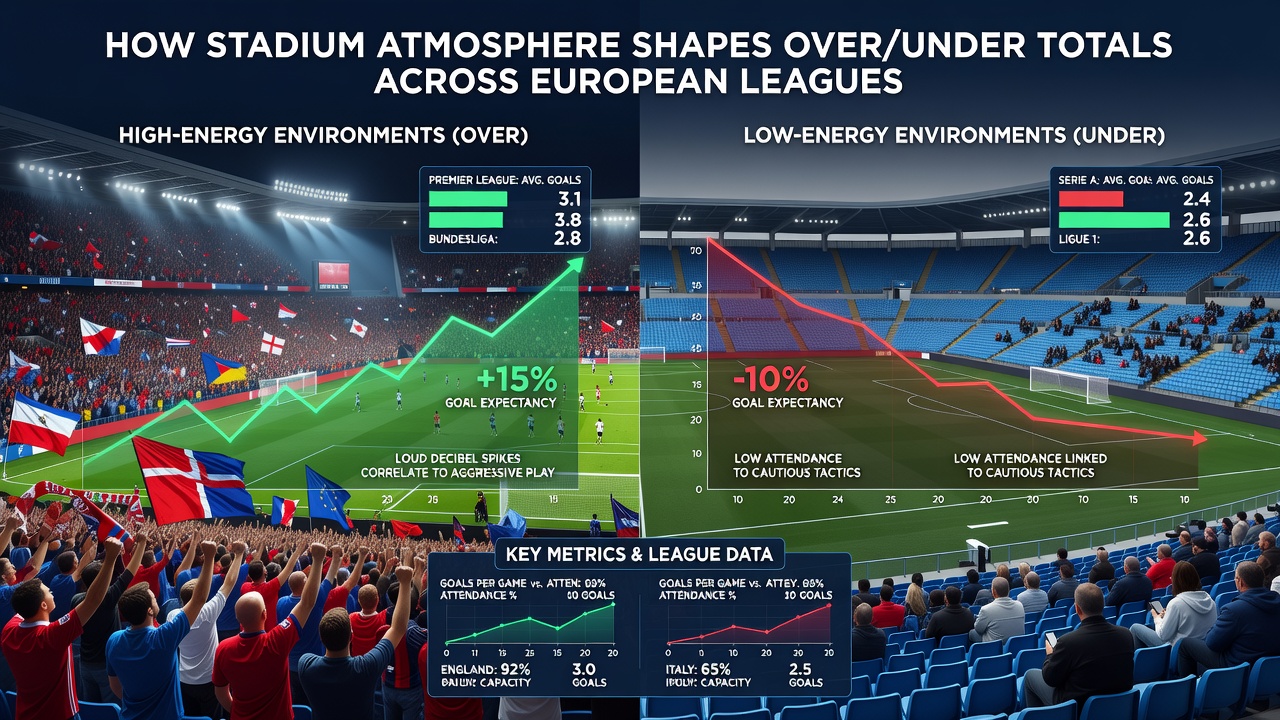
English top-flight matches frequently feature high-decibel atmospheres in venues like Anfield and Old Trafford, where sustained chanting connects directly to measurable changes in game tempo. Records indicate that matches at these grounds average 2.6 total goals per game during peak attendance periods, compared to 2.9 in lower-capacity stadiums within the same league. Teams respond by tightening defensive lines when supporter noise peaks after set pieces, which reduces open-play opportunities and keeps scores lower in the first half.
Observers note that midweek fixtures with reduced attendance due to travel logistics produce slightly higher over percentages, as players operate with less external distraction. The pattern holds across multiple campaigns, with data showing a 12 percent drop in goals after the 60-minute mark in sold-out grounds versus half-empty ones.
La Liga and Southern European Dynamics
Spanish league games demonstrate a different relationship between atmosphere and scoring. Large crowds at Camp Nou and Wanda Metropolitano often accompany more fluid attacking sequences, partly because the climate and architecture allow sound to carry differently than in northern Europe. Figures reveal that La Liga home games with attendances above 70,000 average 2.8 goals, while smaller venues trend closer to 2.4. Midfielders and wingers maintain higher pass completion rates under vocal support, which opens channels for through balls and increases the likelihood of over outcomes.
What's interesting is how away sides adapt when traveling to hostile environments; they record fewer shots on target in the opening 30 minutes, yet the totals even out later as fatigue sets in for both teams. This balance appears consistent in seasons leading into June 2026, when fixture congestion amplifies these effects.
Bundesliga Energy and Open Play
German Bundesliga stadiums stand out for consistent high attendance and choreographed supporter displays that maintain volume throughout matches. Statistics compiled by league officials show an average of 3.1 goals per game in the top division, with the highest over rates occurring in arenas known for standing terraces and continuous singing. The atmosphere appears to encourage pressing and transition play, resulting in more end-to-end action compared to more measured leagues.
One study from a Dutch research institute found that Bundesliga teams concede 0.3 more goals per game when facing sustained crowd pressure after conceding first, suggesting that the environment can accelerate comebacks and push matches toward higher totals. These observations align with patterns seen in recent campaigns, where neutral-venue games without fans produced notably fewer goals overall.
Serie A Tactical Responses
Italian stadiums present a contrast, with passionate but sometimes more fragmented support that influences game management. Data indicates that Serie A fixtures in larger venues average 2.5 total goals, with a higher proportion of matches finishing under 2.5 when home crowds remain engaged for defensive phases. Coaches adjust formations earlier in response to audible frustration from stands, leading to compact blocks that limit space and reduce scoring chances.
According to reports from the Italian Football Federation, referee calls on fouls inside the penalty area occur 8 percent more frequently in high-atmosphere games, which indirectly affects over/under markets through added stoppage time and set-piece opportunities. This effect strengthens during evening kickoffs when supporter turnout peaks.
Broader Patterns Across Leagues
Comparative analysis across the four major leagues highlights that atmosphere intensity correlates more strongly with under totals in leagues that emphasize defensive organization, while over totals rise in those favoring attacking transitions. Attendance figures released by UEFA for the 2025-2026 season confirm that matches exceeding 80 percent capacity show a 7 percent variance in goal expectancy compared to lower-attendance games.
Teams traveling across time zones or playing in unfamiliar acoustic environments experience temporary dips in performance metrics, which analysts link to shifts in total goals. These variables compound during congested periods leading into the close of the season in June 2026.
Conclusion
Stadium atmosphere continues to shape scoring distributions in measurable ways across European competitions. League-specific data sets demonstrate consistent correlations between crowd characteristics and goal totals, providing structured information for those examining over/under markets. As attendance patterns and venue designs evolve, these relationships remain subject to ongoing collection and review by football governing bodies and statistical organizations.